
Rooms feel stuffy
Note which rooms feel uncomfortable and when. Understanding existing outdoor-air and exhaust routes is more useful than assuming a larger fan will solve the concern.
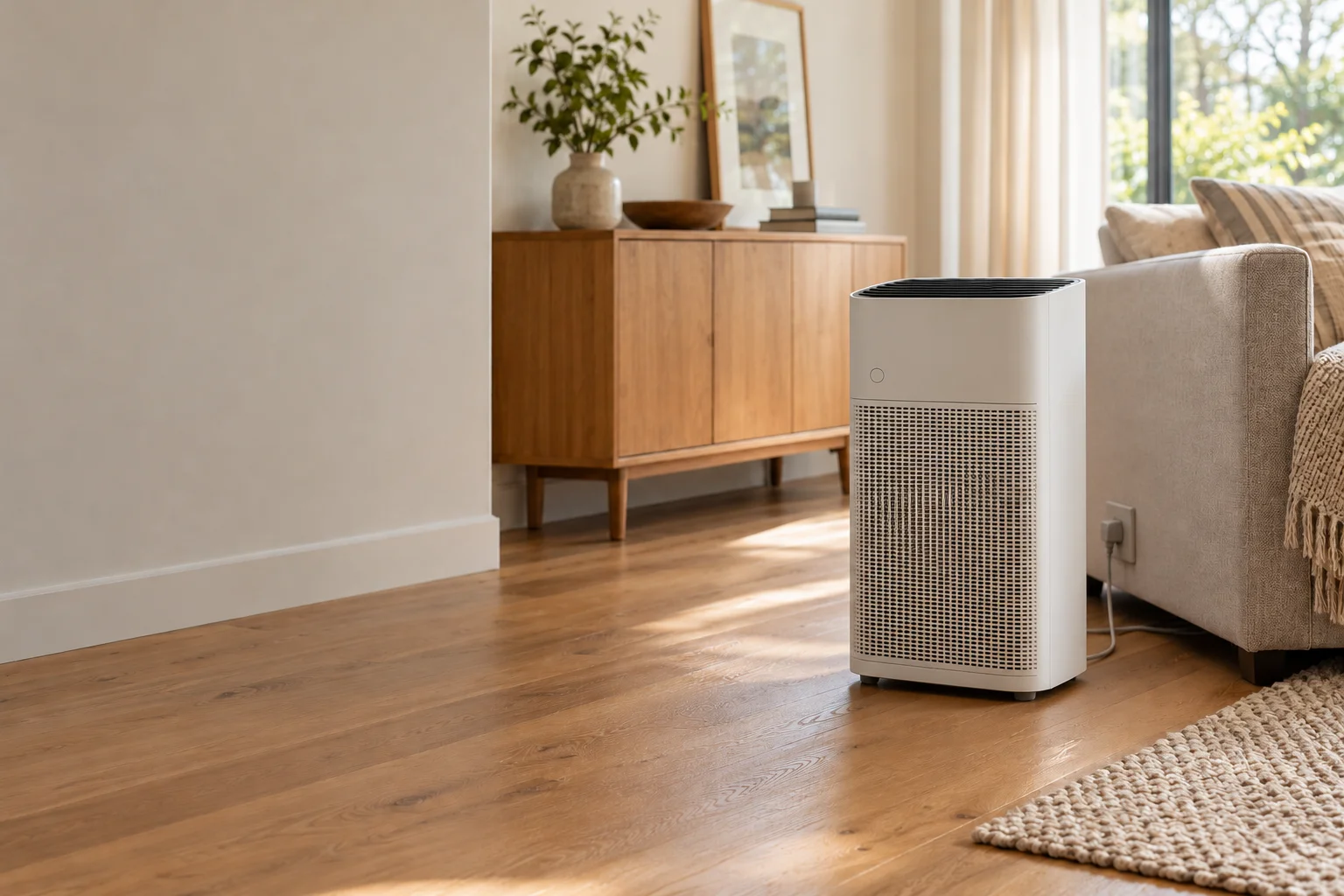
Residential indoor air quality · Dallas, Texas
From stuffy rooms to recurring dust or dampness, indoor air quality starts with understanding the concern. Learn how ventilation, filtration and moisture control fit your home before choosing equipment.
What this covers
Understand what is causing the concern before choosing ventilation, filtration or humidity equipment.
For understanding how air is exchanged.
Look at how outdoor air enters and how kitchen and bathroom air is exhausted. Options should suit the home, its existing ventilation and outdoor conditions.
For choosing a filter that fits the system.
Understand what the filter captures and whether an upgrade suits the fan, filter housing and airflow. A higher rating is useful only when the system can support it.
For persistent dampness or condensation.
Understand how ventilation and HVAC operation relate to humidity before choosing equipment. Moisture from leaks or building defects needs the appropriate trade; an air cleaner does not fix the source.
For circulation within the home.
Room-to-room air movement, return paths and system upkeep affect how conditioned air circulates. Keep that separate from how outdoor air enters the home.
Start with what you notice
Stuffy rooms, dust, odours and dampness are useful observations, not air-quality measurements or diagnoses.
Note which rooms feel uncomfortable and when. Understanding existing outdoor-air and exhaust routes is more useful than assuming a larger fan will solve the concern.
Note when the concern returns and any connection with cooking, cleaning or other activities. Look at possible sources before choosing a filter or air cleaner.
Note where moisture appears and whether it returns after bathing, cooking or rain. Ventilation and humidity may be relevant; leaks and building problems need separate attention.

Ventilation exchanges indoor air with outdoor air.
Filtration treats recirculating indoor air; it does not introduce outdoor air or remove every pollutant.
Before choosing equipment
Two useful conversations before selecting an indoor-air product or changing the existing system.
Define the purpose
Which source or moisture issue needs attention? Is the aim outdoor-air exchange, particle filtration or both? Ask what the proposed option can and cannot address.
Check compatibility
Does the option suit the existing equipment, airflow and available space? Ask about filter compatibility, access and ongoing care before selecting a product.
Useful answers
Practical answers about outdoor air, compatible filters and moisture concerns. Further reading: EPA indoor air quality guidance (opens in a new tab); EPA air cleaner and filter guide (opens in a new tab).
Usually not. Most residential central air-conditioning systems recirculate indoor air rather than mechanically bringing outdoor air inside. Some homes have dedicated outdoor-air connections or separate ventilation equipment. Check what is installed rather than assuming that running the AC provides ventilation.
A higher-efficiency filter may be suitable, but the fan, filter slot and required airflow must support it. Check the equipment instructions and have compatibility confirmed before upgrading. A rating alone does not establish the right choice.
No. HVAC particle filters do not remove every pollutant and generally do not remove gases. Some purpose-made media target certain gases, but no air cleaner is a complete solution. Address pollutant sources and ventilation as well.
Investigate moisture sources, cold surfaces and how wet rooms are exhausted. Condensation alone does not identify the cause. HVAC ventilation and humidity control may help where appropriate, but leaks or building defects need the relevant trade. A purifier does not fix a moisture source.
Dust deposits do not establish that the duct system needs cleaning. EPA does not recommend routine duct cleaning; whether it is warranted depends on the actual condition and problem. Ask what evidence supports the recommendation.
Your next step
Describe what you’re noticing at home through the demonstration enquiry.
Prime Breeze is a fictional website demonstration by Plan and Pulse (opens in a new tab). No HVAC services or estimates are provided.